
Imagine Bravely
In the past, when asked to pick a “walk on” song, I tended to lean toward the theme of the event or the talk I was giving. Today, I’d choose Sara Bareilles’ Brave. And here’s the part I want people to hear over and over:
…I wonder what would happen if you
Say what you wanna say
And let the words fall out
Honestly
I wanna see you be brave
With what you want to say… (2013, Bareilles).
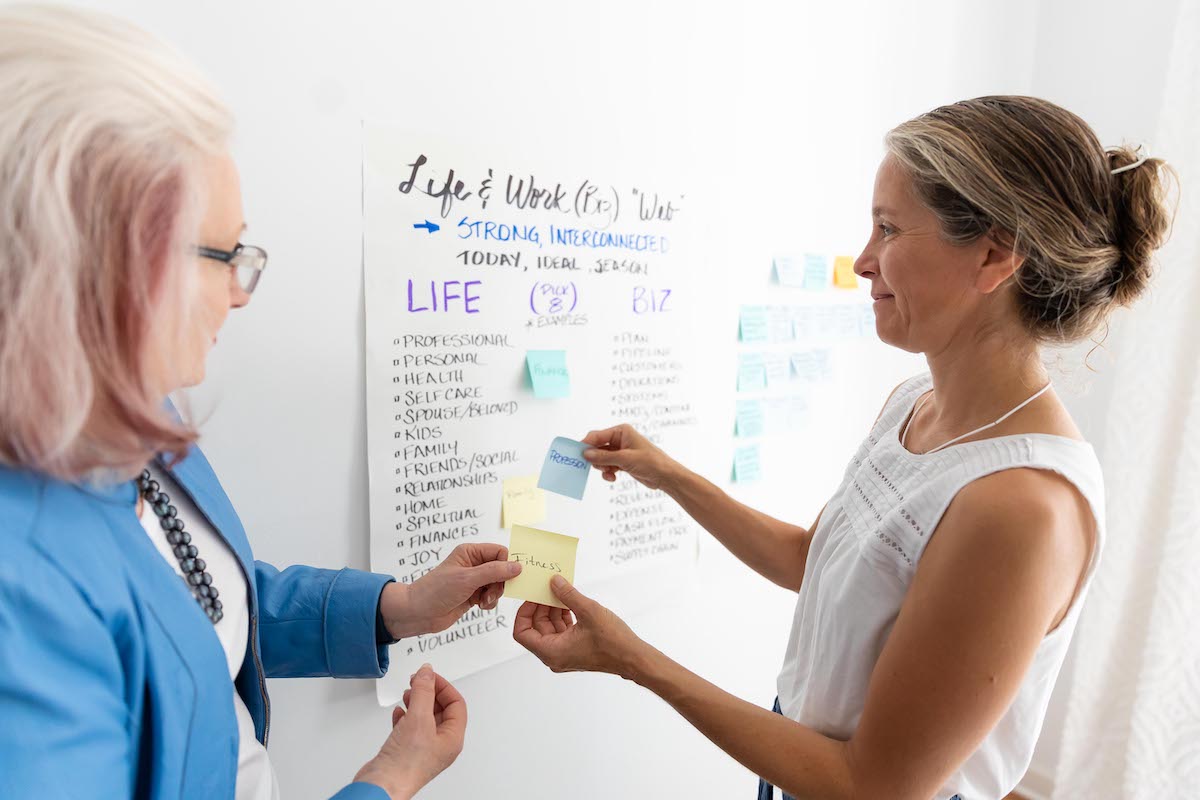
When our heart or mind prompts us to consider a different path for life and work, we need to listen to that voice. Speaking brave words to ourselves and others sparks our imagination. Imagination is generative. We create space and envision new possibilities. When helping leaders and professionals to find their something new, something different, we identify where they are in the generative process. If you’re ready to imagine bravely and reinvent or refresh your life and work, the Imagine-Design-Do™ framework offers four phases of action to help you to succeed.
Imagine
The first phase of altering our path involves acknowledging the niggling prompts and embracing ideation for our “something new.” We need to define and name the change we seek. Perhaps we just need small, incremental shifts. Or we might want a full-on pivot. If time and money are not an object, how do we want to experience our life and work? The imagine phase is a time to dream big and allow for ideas without limits.
Our deliverable for this phase is a simple, broad-brush description of what we seek. Examples might be to change industries, move from director to VP, launch or scale a business, obtain a graduate degree, elevate our leadership in specific ways, or create better integration across our life and work. Our next step is to create a framework around this preliminary idea.
Design (Part 1)
Once we can name our “what’s next” in life and work, we need to clarify. Our initial design thinking helps us specify what this looks and feels like to us. What results or outcomes are important? What’s the gap between where we are and where we’d like to be?
Whether our something new focuses on professional or business goals or addresses a life change, think of life and work as integrated. Instead of a scale where we try to make pieces balance out, recognize our holistic self as having seasons and boundaries. What boundaries do we want to maintain? What do we want to let go of to create space for our something new?
Our deliverable builds out the idea from the Imagine phase to a plan. As an example, perhaps we would like to add a graduate degree to elevate our knowledge and performance, support a pivot, or bring new opportunities. The framework involves what degree we seek, the institutions we may apply to, the type of program and how this choice impacts other parts of our life and boundaries. We may want an accelerated program to finish quickly or we may need greater flexibility to allow us to work and engage with family in parallel with our learning. Once we have this framework, we move to the next phase.
Design (Part 2)
If we want to take a trip, we generally have many options. We can fly, drive, take a train or bus. We can camp or choose hotels or an AirBnB. We can experience a short vacation or a leisurely exploration of a region. The framework from Part 1 helps us choose amongst options according to any defining criteria. Part 2 of design involves creating a roadmap.
A roadmap guides our journey. A map reflects our starting point and desired outcome, with key milestones to show how we’re making progress. Two really important thoughts need to shape our understanding of a map as a metaphor. First, creating a map doesn’t actually get us anywhere. We have to step out and do. The second idea about a map is that we need to flex around challenges thrown our way. On a trip, we might have to find a route around road construction or change our reservations when we decide to include a day trip to experience something exciting. Our next phase shifts us from ideation and planning to execution.
Do
Doing incorporates two parts… execution and accountability. Actions might be small, incremental, and safe. Actions might be bold and require courage to step into our new being. In any form, action is forward moving. Let go of executing perfectly; we learn from imperfect action and can embrace a significant jumpstart by doing, assessing real time, making adjustments, applying insights to our next sprint of doing. Small actions add up.
But let’s be honest, life happens. How do we manage across competing priorities and assure we stay on track? Accountability offers an essential support to resolve that challenge.
Let me share my current season of life challenges as an example. Over the past couple months, a family member has been physically declining in hospice care. This has been a time to inform family, who are spread across the country in different time zones. Coordinating Zoom visits gave people an opportunity to make final connections with our loved one. I’m also her guardian and had to meet court requirements for reporting. Finally, this week she died. I’ve been reaching out to family once more and initiating the laundry list of calls, notifications, arrangements, and documents that must be completed when a human has passed away.
On the work front, I am a part of two accountability groups. Even though I’ve had to considerably scale back on planned actions, knowing I needed to share small wins, challenges, and progress kept me fitting a task here and there to fit five or ten minutes of availability. I have to give myself grace to allow this slower pace to progress in business and recognize that the delay will not prevent me from achieving critical goals. My launch dates may slip, because I chose to prioritize the family. Scaling my business is important and critical to growth; supporting family is important and reflects my values.
Your competing priorities may be different. Perhaps you have small children. Or you’re leading a big change in your company. Maybe you’re trying to prioritize health or learning or community. Finding approaches that support your accountability will help you “do” and execute in ways that create momentum and progress.
I started with the idea of brave words. When we imagine and speak bravely, we generate change in our brain and the world around us. Imagine-Design-Do™ offers a new way to think about how to create life and work that reflects what is important to us, our values, goals, and dreams. Are you ready to speak bravely? I’d love to hear those words!
Reference: Brave, Sara Bareilles. Released 2013 on the album The Blessed Unrest.
Thank you for visiting Dr. Kathryn Bingham’s blog! We invite your discussion at LEADistics’ community page. Fans and honest critics are welcomed! Please see our Comments Policy and reuse Permissions on the TOOLS & FAQ page. All Imagine Bravely posts are covered by copyright law, with all rights reserved.
Social Share
Recent Posts

LeadUP! Juana Bordas
This LeadUP! Conversation features Dr. Juana Bordas, president of Mestiza Leadership International and author of newly updated The Power of Latino Leadership (listen or watch here). Bordas shares how her immigrant experience shaped her leadership. [...]

Power of the Pivot
The idea seems simple. When something isn’t working, just change. Shift. Adapt. But our brain sabotages the effort. We’re convinced that if we just do better or try harder with our current path or process, [...]
LeadUP! Andrea DeWitt
In this LeadUP! episode, Dr. Kathryn Bingham and author Andrea DeWitt talk about her new book, Name, Claim & Reframe and how individuals can step into their power, their potential, and their truth. Both the [...]